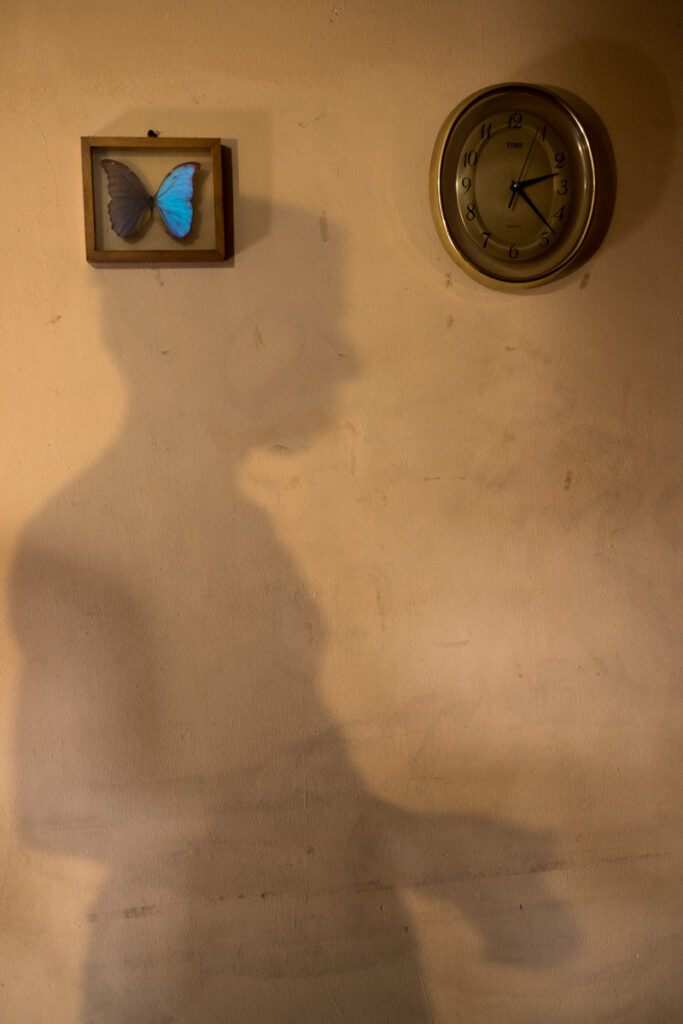
Men who build their gender identity by referring to the dominant model of masculinity seem to be in a constant struggle to prove their manhood, silencing weaknesses and vulnerabilities. At the same time, this model is based on the idea that any behavior deviating from the norm is a sign of failure in the construction of male identity and must therefore be repressed. This insecure and frustrated masculinity often manifests in violent behaviors, which end up affecting society as a whole—both in private and public spheres, including social media. In a society undergoing change, I want to focus on a new narrative of masculinity.
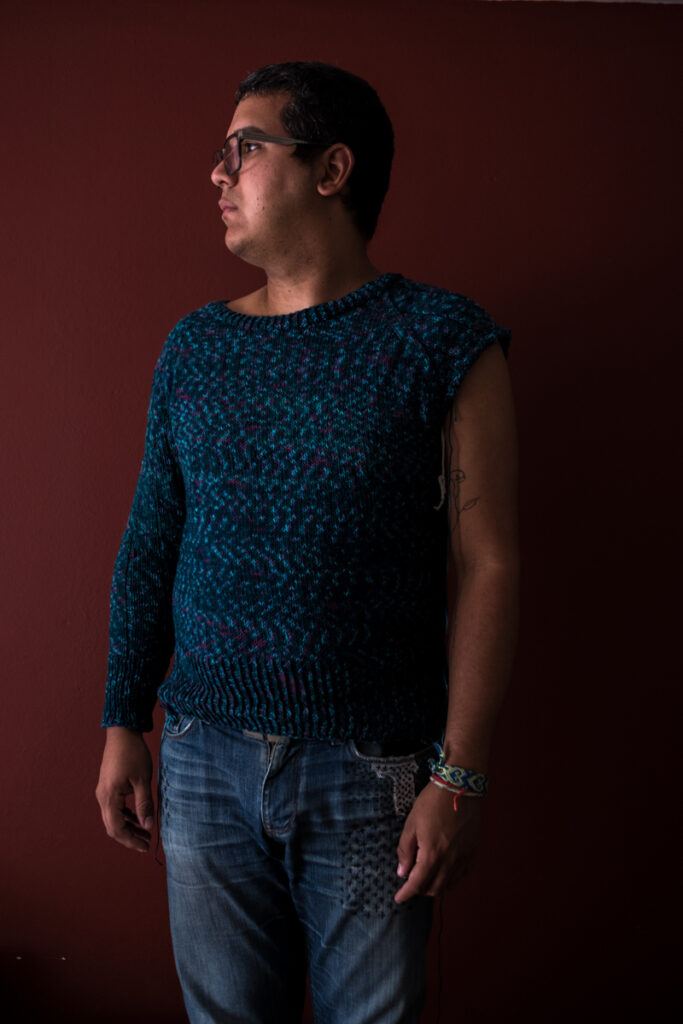
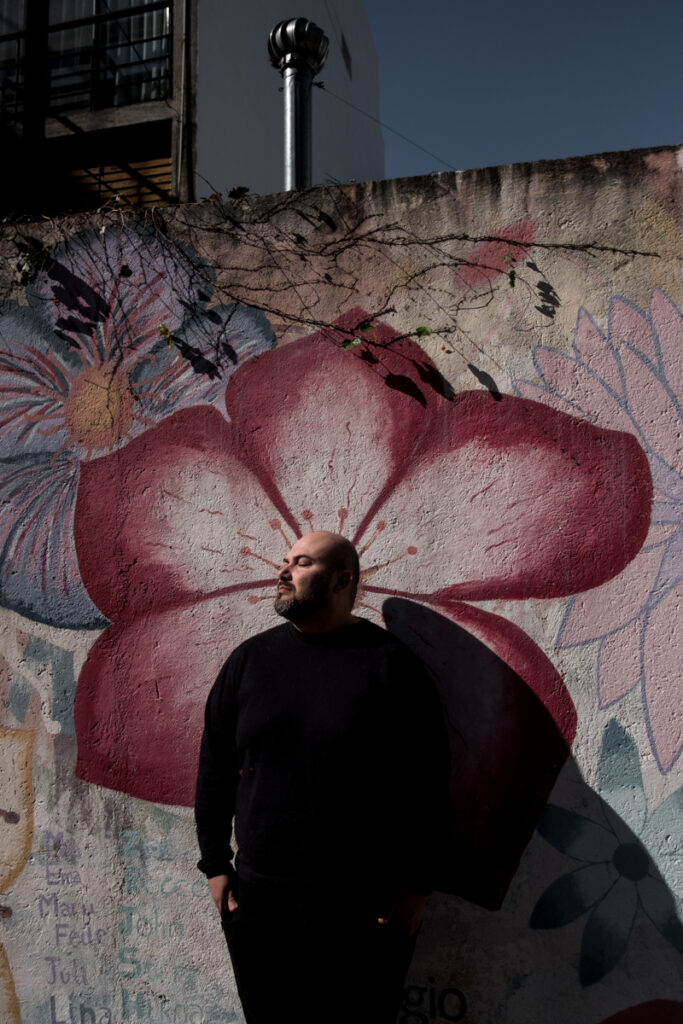
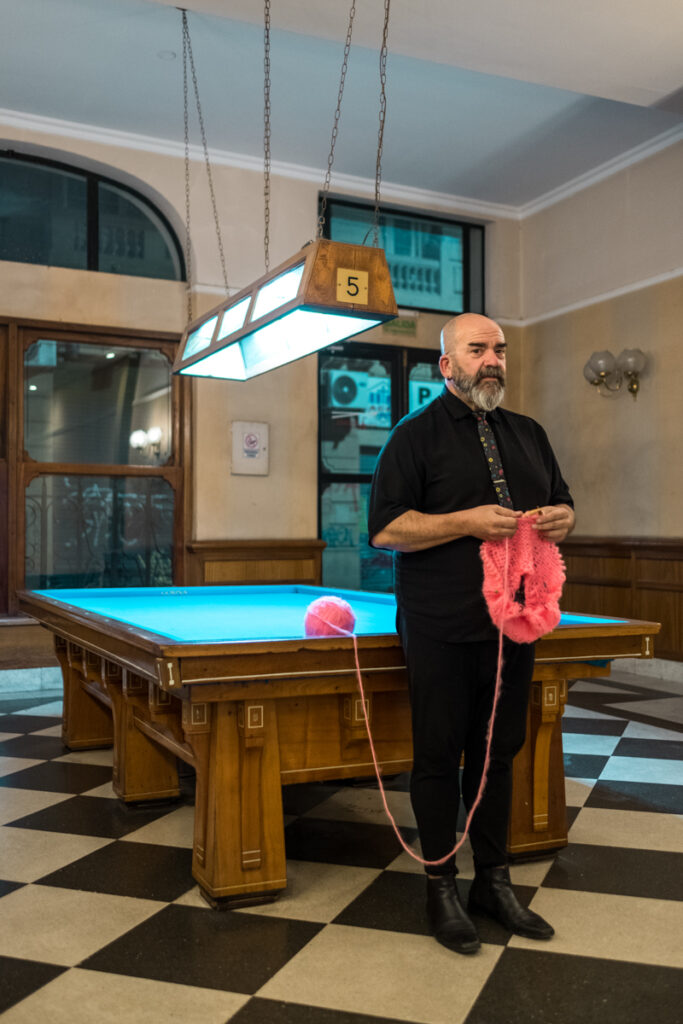
In Buenos Aires, several groups of men are engaged in collective processes aimed at reconnecting with their emotions, desires, and vulnerabilities. During my research, I chose to explore Hombres Tejedores (Weaving Men), a collective of men who, through private actions, come together in public spaces to perform weaving as a way of affirming the universality of a gesture that should no longer be stigmatized or kept secret. Observing this practice, my attention turns to the transformation it suggests—an individual and collective process of deconstruction and reconstruction, weaving the map of the world we wish to see, identifying what already exists in the present, retelling it, and thus contributing to its germination.
Beneath the mantle of invisibility, or within a cocoon, the radical changes triggered by metamorphosis reveal themselves after an intense period of incubation, through a process of dissolution and liberation. By constantly bridging the private and public spheres, the weaving men choose to make this liberation visible to the world as an inherently political act.
Until we let go of the fear that drives us to obsessively preserve the form we inhabit, will we ever be able to adapt to change?